Decarbonising Aotearoa together

Welcome to our 2025 Impact and Transparency Report on our Certified Renewable Energy product.

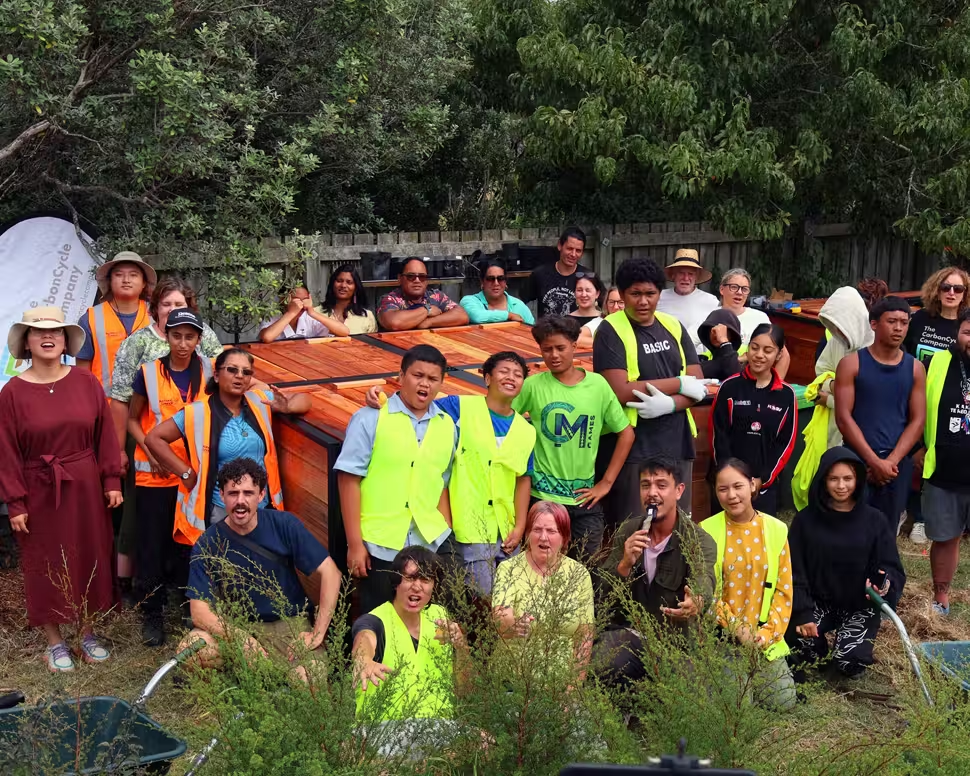
Annual reports tend to be mostly about numbers, and the numbers are here. But this report is just as much about what communities do with the funding they receive. So you’ll find the figures, and you’ll find the stories behind them.

These stories show the power of collective effort. Climate change won’t be solved by a single person, policy, community, or company. That’s why we partner with our Certified customers to decarbonise communities around Aotearoa New Zealand, in keeping with our purpose: clean energy for a fairer and healthier world.

In 2025, we invested more than $1.8 million into 37 community projects through our Community Decarbonisation Fund. Powered by sales of our Certified Renewable Energy product, the Fund helps community groups complete decarbonisation projects without diverting funding from their core work.

Read on to see what these groups are doing across the country, and what the funding is making possible.

Transforming communities in 2025

View projects by:

Previous years

2022

$333K
in funding
05
community groups received funding

2023

$1.1M
in funding
14
community groups received funding

2024

$1.5M
in funding
24
community groups received funding

2025

$1.8M
in funding
37
community groups received funding

Powering change across Aotearoa

Each year, the majority of the net proceeds from Meridian's Certified Renewable Energy product are distributed to community groups across Aotearoa. The fund helps them take real steps toward a lower- carbon future, without diverting from the important work they already do.

Helping our community

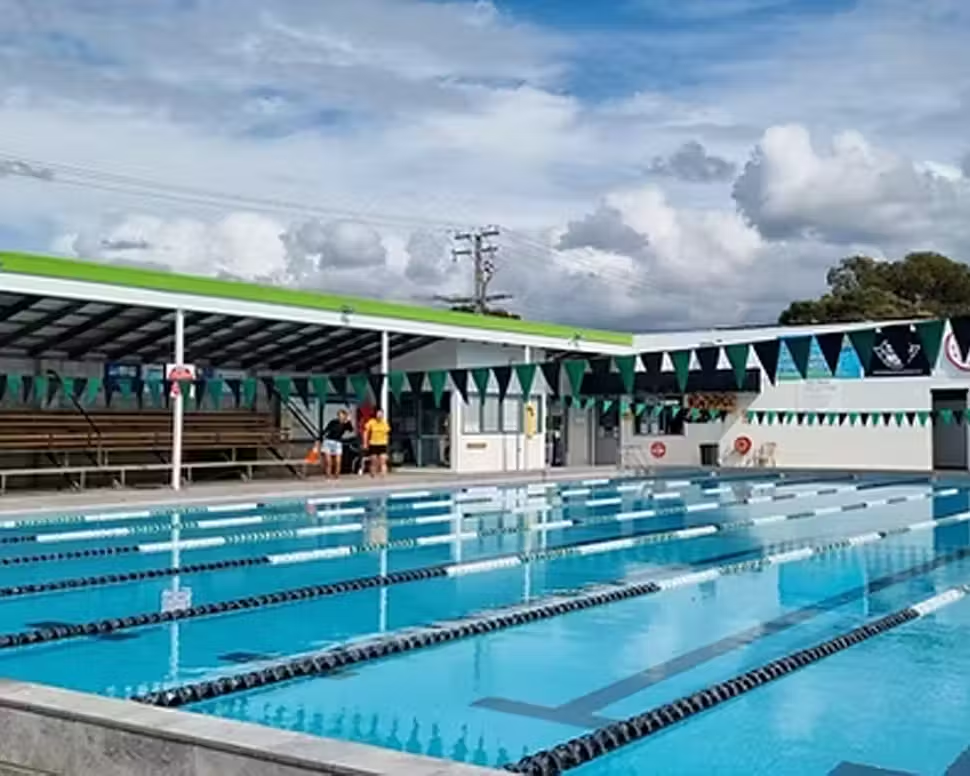
From electric delivery vans to solar-powered swimming pools, see how this year’s Community Decarbonisation Fund recipients are putting their funding to work in their communities.

Just Zilch

Video summary

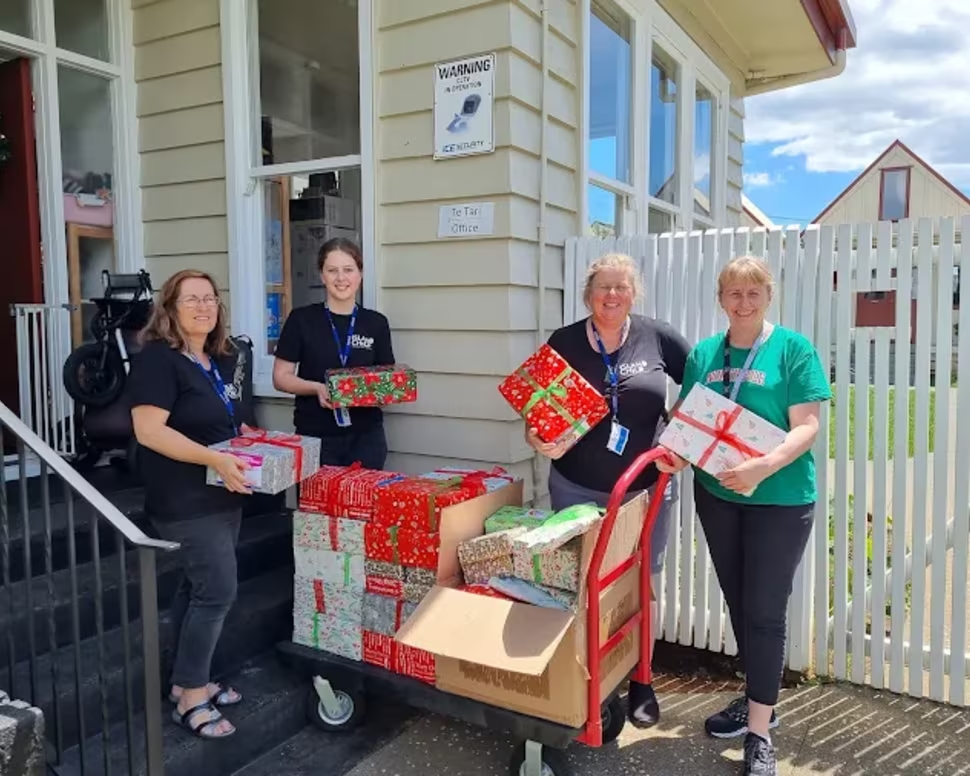
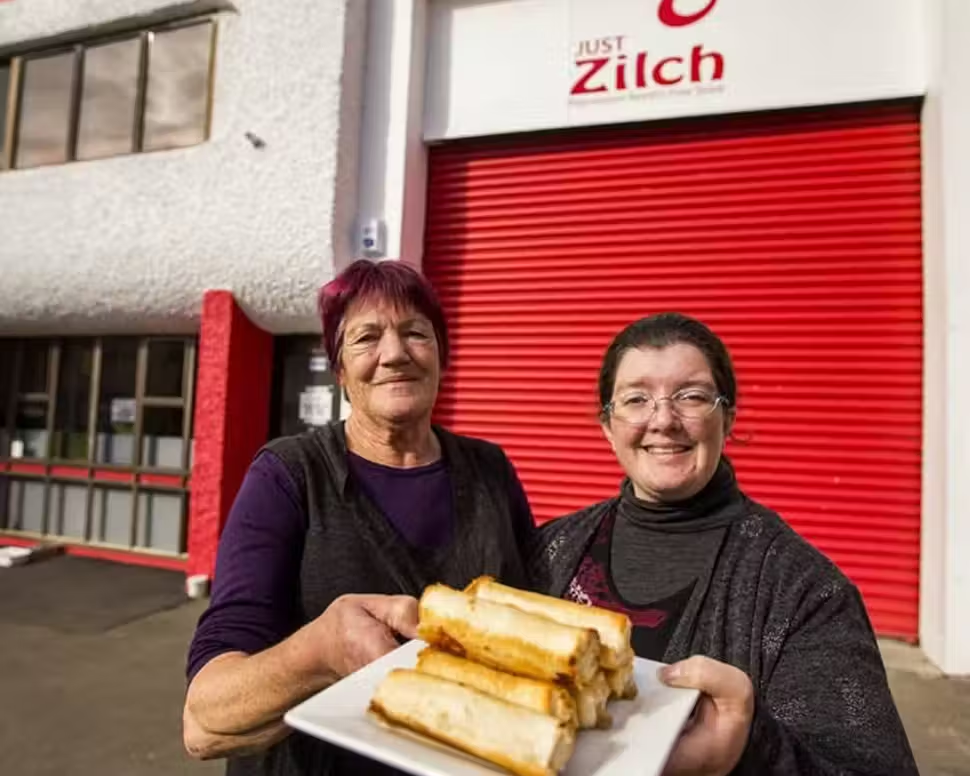
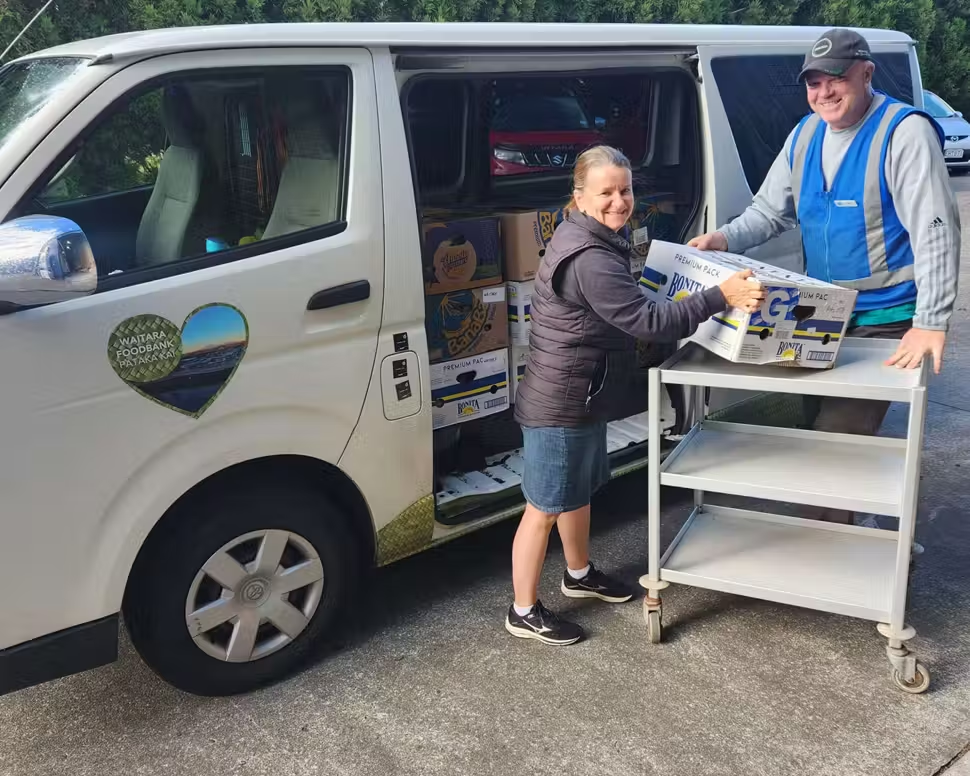
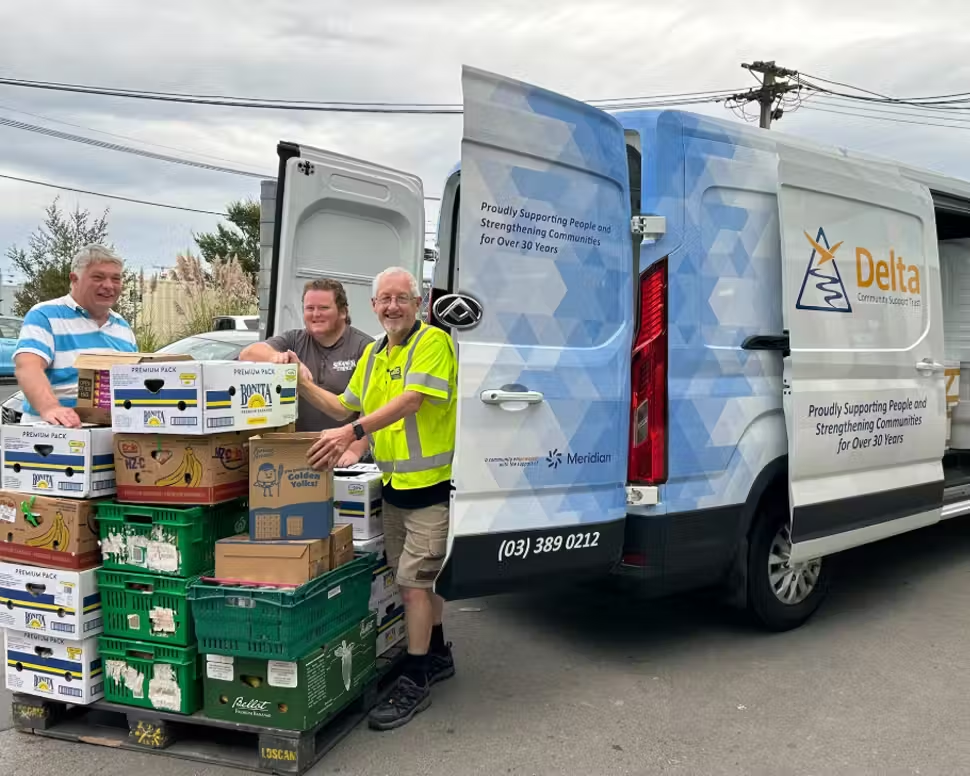
Founded in 2011 in Palmerston North, Just Zilch is New Zealand’s longest-running free store. The principle is simple: anyone who comes through the door is welcome to take what they need, no questions asked.

Each day, the team rescues around 2,000 kg of surplus food from supermarkets, producers and local businesses. Some goes directly to the people who walk into the store, the rest to more than 80 community groups across Palmerston North and the wider Manawatū–Whanganui region. All told, the operation supports around 450 individuals daily.

$33,285 from the Community Decarbonisation Fund is helping Just Zilch install a 23.6 kW solar energy system at its Featherston Street site. Running the chillers, fridges and electric delivery van takes more than 59,000 kWh a year, and the solar system covers that load. That adds up to more than $6,300 in savings in its first year and over $200,000 across 25 years, all of which flows back into keeping the food rescue work running.

The Graveyard Shift

Video summary

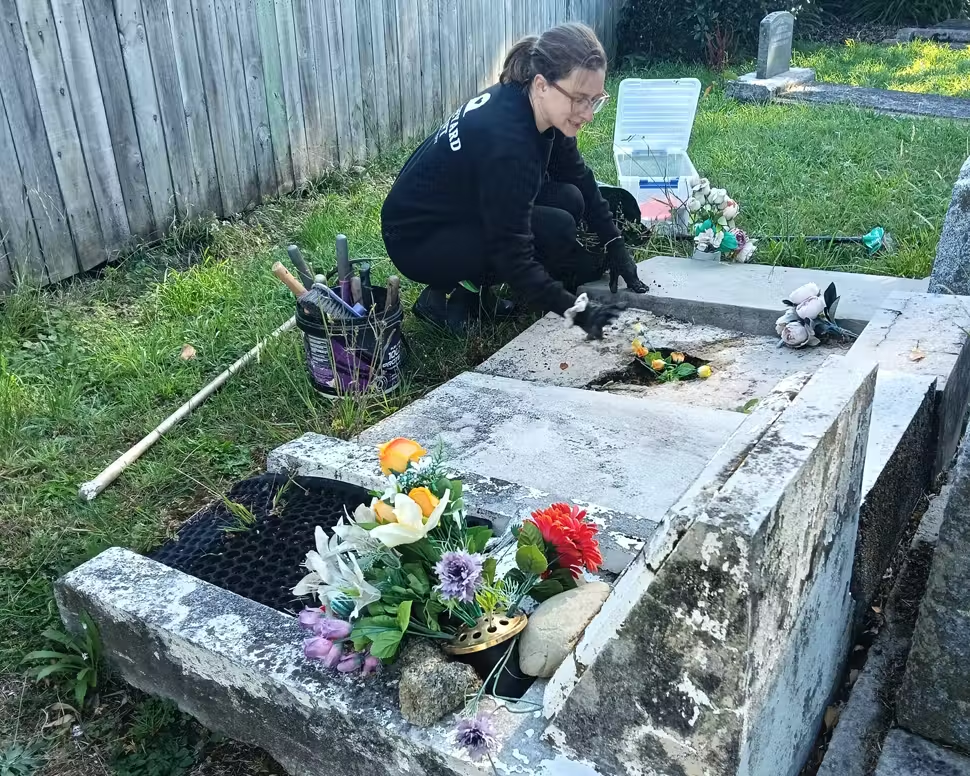
The Graveyard Shift is a volunteer-led community group dedicated to reclaiming graves that would otherwise be lost to overgrowth. Each month, volunteers of all ages, cultures, and backgrounds gather at Taitā Cemetery and St John’s Upper Hutt to clear weeds, uncover headstones, and recover what time has almost taken: names, dates, memories.

For volunteers, it’s meaningful because as long as a name can be read, the person it belongs to isn’t entirely gone. The group grew from the Upper Hutt community, drawing in more people over time, and runs on the classic Kiwi grassroots spirit: home baking on working days, drinks in cans that get recycled.

$1,468 from the Community Decarbonisation Fund is helping The Graveyard Shift replace its petrol-powered weed eaters and leaf blowers with battery alternatives. In a cemetery, noise matters. Petrol tools get the job done but they’re loud, and people visiting family members deserve peace and quiet. For a group already running as sustainably as possible, the change also means no fossil fuels on site and a smaller footprint with every working day.

Hōhepa Hawke’s Bay

Video summary

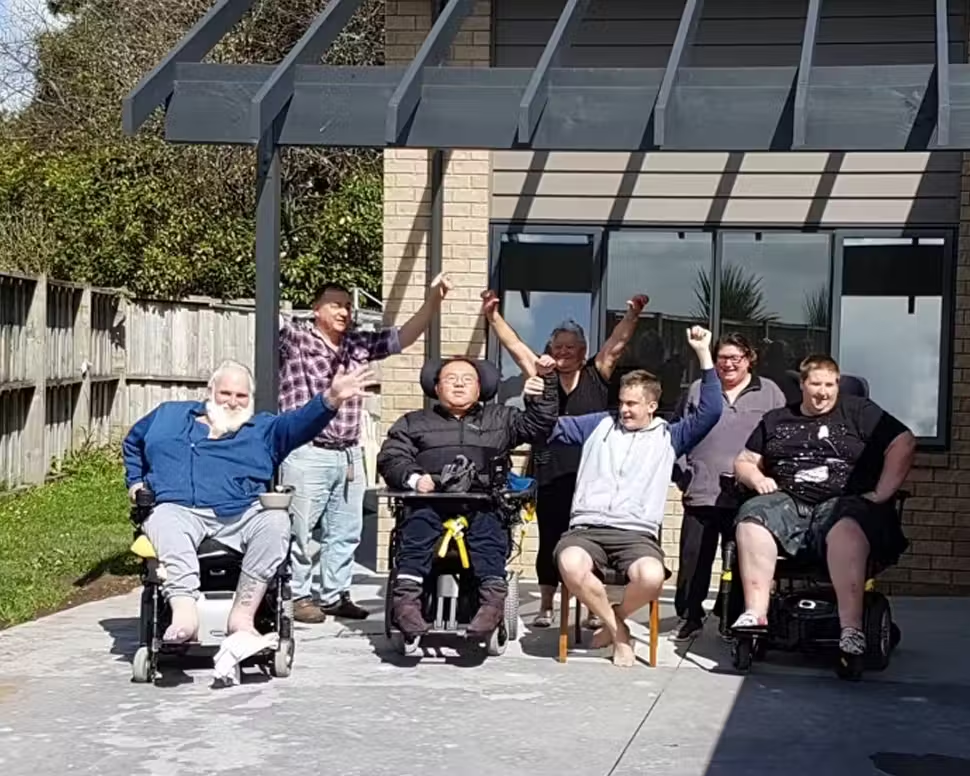
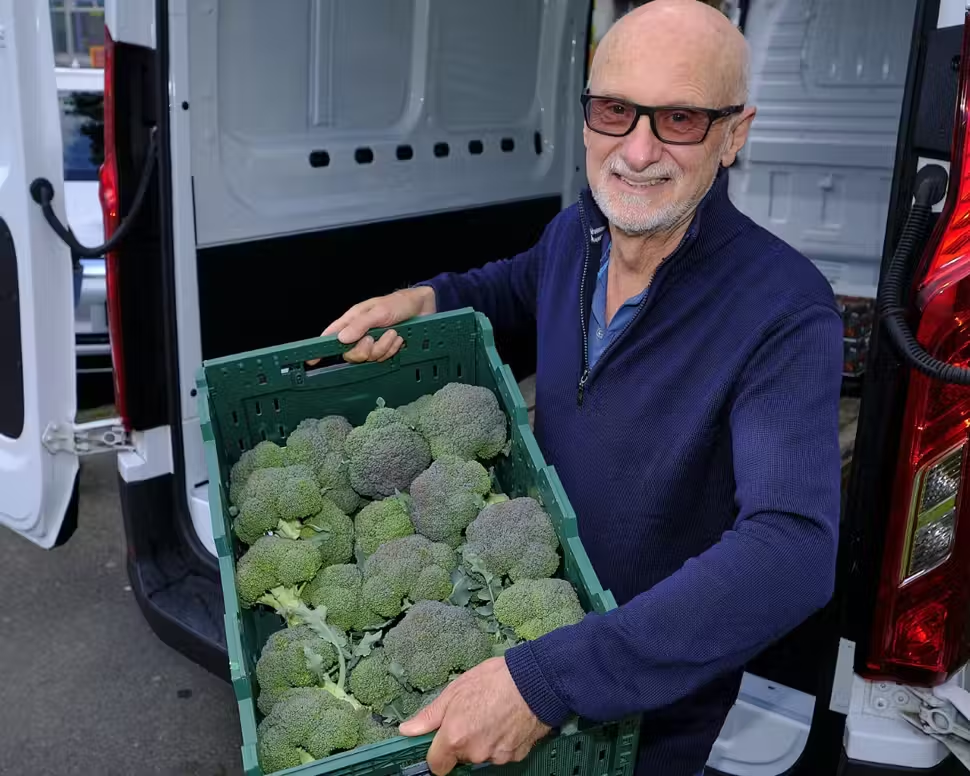
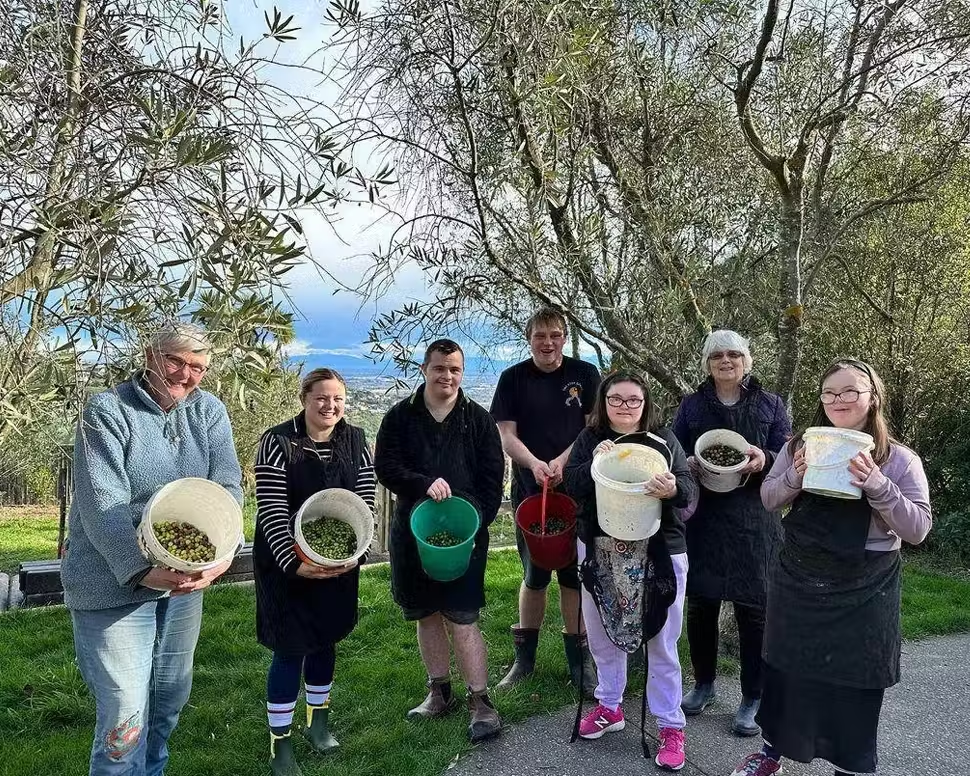
Since 1957, Hōhepa Hawke’s Bay has supported people with intellectual disabilities through homes, a school, day services and meaningful work. Today more than 160 people are part of the Hōhepa community.

Its social enterprises include a market garden, a biodynamic farm, award-winning cheesemaking, a native plant nursery and craft workshops, each one a place to build skills, get creative, and connect with others. Fresh fruit and vegetables, cheese, yoghurt and milk from Hōhepa’s farms are delivered to the community’s homes and school, with the surplus available at the Hōhepa Hawke’s Bay stores in Clive and Taradale.

$28,142 from the Community Decarbonisation Fund has replaced the diesel bore pump at Hōhepa’s Clive dairy farm with a high-efficiency electric pressure pump, housed in a new weatherproof shed. It draws irrigation water for the pastures that feed Hōhepa’s biodynamic dairy herd, and for the organic market gardens. The new system will save 5 tonnes of carbon and 2,000 litres of diesel a year.

Good Neighbour Aotearoa

Video summary

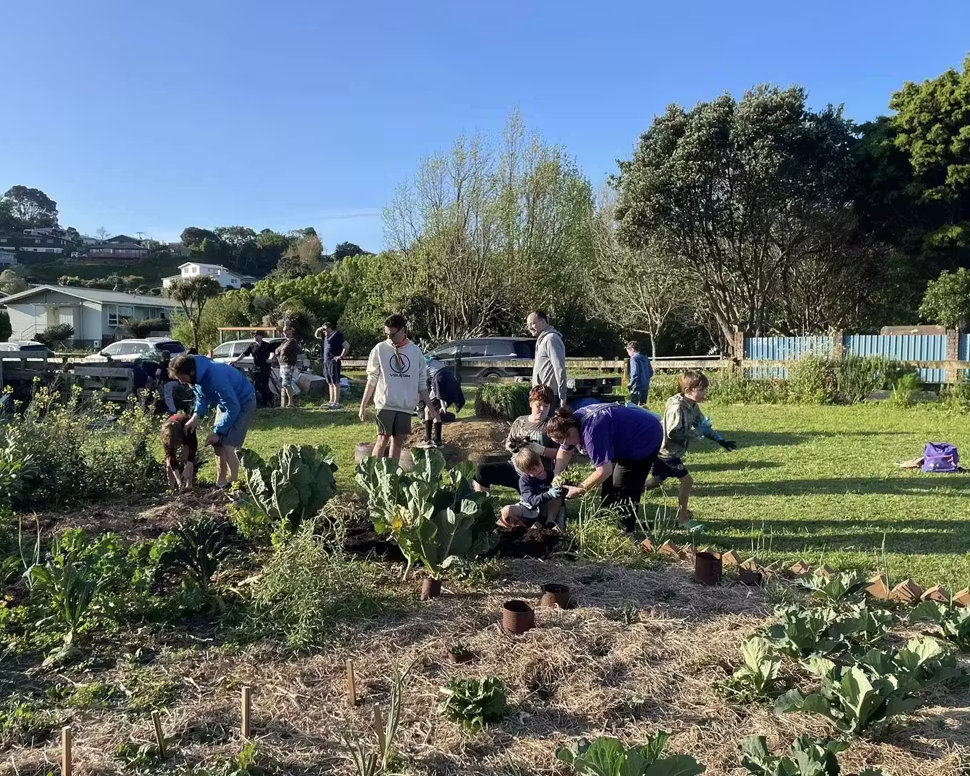
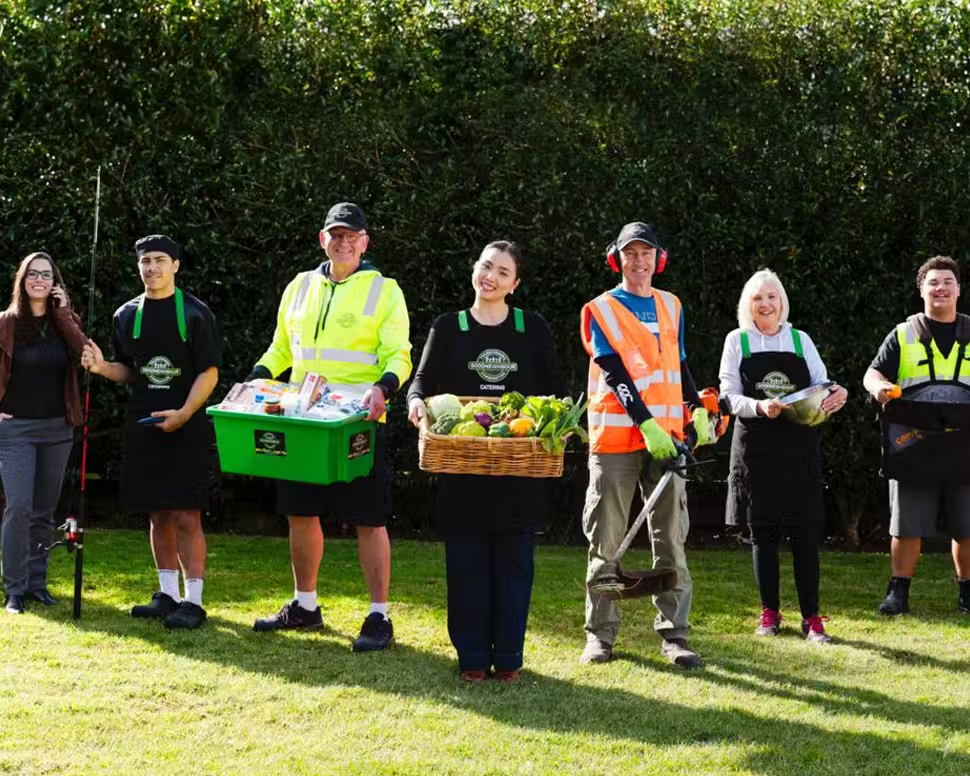
Good Neighbour aims to bring the word 'neighbour' back to the Bay of Plenty. Its six departments cover food rescue, neighbourhood projects, community gardens, firewood, a community kitchen and a care team that helps people not just survive, but thrive. Each initiative is guided by a simple principle: give, serve, and make someone's day.

Each year, Good Neighbour rescues an average of $4.8 million worth of food that’s good enough to eat but not to sell. In the community kitchen, volunteers and people on training and skill-building programmes turn it into meals and food parcels for those who need them.

$45,250 from the Community Decarbonisation Fund has helped Good Neighbour install solar and battery storage at its community hub. The new system powers the refrigeration and freezers that keep the food rescue operation running, cutting power costs and saving 39 tonnes of carbon a year.

Renewable Energy Certificates

The emission of greenhouse gases from fossil fuel electricity generation is a major driver of global climate change. While Meridian already generates energy from 100% renewable sources, we know that is only part of the picture. Climate change is a global challenge, and meaningful progress will take collective action.

A range of internationally agreed initiatives have been developed to support that action, and Renewable Energy Certificates (or RECs) are one of them. At Meridian, our REC programme is called Certified Renewable Energy, also known as Certified.

How it works

The Certified electricity you buy from Meridian is matched to the power put into the grid by our Certified hydroelectric power station and wind farms, which are independently verified by BraveTrace as 100% renewable and releasing zero carbon emissions.

That process earns you internationally recognised Renewable Energy Certificates, which allow you to report your market-based Scope 2 emissions as zero (using the market-based reporting methodology, in accordance with the GHG Protocol’s Scope 2 Guidance).

What makes Certified stand out is that 100% of the net proceeds are reinvested into Meridian’s Decarbonisation Fund. It’s an initiative set up to help community groups and businesses actively reduce their carbon emissions.

To date, we’ve certified 4,281 GWh of electricity[1] for 231 Certified Renewable Energy customers, which has in turn generated $4.73 million for the Community Decarbonisation Fund.

Community groups and organisations can apply for funding from the Community Decarbonisation Fund by providing key project information like a quote, a basic plan and some details that allow us to assess the project’s emissions impact.

Eligible Certified energy customers can also apply for the Business Decarbonisation Fund, which empowers them to use 50% of the charges they pay for Certified Renewable Energy certificates to fund their own eligible electrification projects, with the remaining net proceeds from the charges they pay going to the Community Fund.

[1] Verified by BraveTrace

Join certified

The energy mix

Aotearoa generally has around 85% renewable energy circulating through the grid, but because all electricity is distributed through the same national grid, there’s no way of knowing whether the electricity you’re using comes from renewable sources.

Meridian is a gentailer, meaning we both generate and retail electricity to households and businesses. We’re proud to generate our electricity from 100% renewable sources: wind, water and sun.

Once the electricity we generate enters New Zealand’s grid, it flows through a shared network of infrastructure and powerlines to wherever it’s needed.

In 2025, 88% of the electricity generated in Aotearoa came from renewable sources like ours. [1] But that doesn’t mean all of New Zealand’s electricity is always 88% renewable. Everyone receives a mix of renewable and non-renewable electricity from the grid. That mix changes throughout the day and across the year, depending on demand and which generation sources are being used at the time.

Renewable Energy Certificates, or RECs, do not change the electricity flowing to a customer. Instead, they provide proof that the electricity a Certified customer purchases from us has been directly matched by electricity generated from our BraveTrace-verified 100% renewable generation assets. Certified customers can then report their market-based Scope 2 emissions as zero.

We also plan to build more renewable generation and certify more assets over time, helping us increase the amount of Certified Renewable Energy we can offer customers while contributing to a more renewable energy mix overall.

[1] Source: New Zealand Trade and Enterprise (NZTE).

All about emissions

There are internationally accepted ways of reporting on the different types of greenhouse gas emissions generated by a company or organisation:

Scope 1

Emissions are direct greenhouse gas emissions from sources a company owns or controls. This includes emissions from fuel combustion in boilers, furnaces, vehicles, etc.

Scope 2

Emissions are indirect emissions from the generation of electricity, steam and heating a company uses.

Scope 3

These emissions are usually the largest portion of a company’s carbon footprint, but they're the hardest to define and measure. They include emissions relating to the other products, services and materials the company buys to do its work. They also include the emissions generated when people use their products and services. They cover waste disposal, other investments the company makes and more.

Greenhouse Gas Protocol

Renewable Energy Certificates, including those in our Certified product, enable our customers to report the market-based Scope 2 emissions of the electricity in the certificate as zero – as per the market-based reporting methodology, set out in the Greenhouse Gas Protocol (GHG) Scope 2 Guidance.
The GHG Protocol is based on a 20-year partnership between the World Resources Institute (WRI) and the World Business Council for Sustainable Development (WBCSD). It works with governments, industry associations, NGOs, businesses like ours and many other organisations. It’s developed comprehensive global standardised frameworks to measure and manage greenhouse gas emissions.

How Certified works

Generation from renewable and non-renewable sources enters the grid

Meridian generates electricity from 100% renewable resources

All electricity, however it’s generated, is distributed through the national grid to consumers.

Meridian logo, icon only

Certified customers’ consumption is matched to Meridian’s 100% renewable generation via REC’s

REC’s allow certified customers to report their market-based Scope 2 emissions as zero*

100% of net proceeds from Meridian’s Certified product

Meridian logo, icon only

Decarb Fund

Funding for eligible community electrification projects

Meridian logo, icon only

Business Decarb Fund

Funding for eligible business electrification projects

We’re committed to doing good things with our energy and helping you do good things with yours

NZSki - Mt. Hutt Ski Fields

Our Certified assets

Aotearoa generally has around 85% renewable energy circulating through the grid, but there’s no way of knowing if the electricity you’re using comes from renewable sources.

4,281
GWh of Certified electricity to date
231
Certified customers
$4.73m
allocated to the community decarbonisation fund

The electricity generating facilities we have certified for this process:

Meridian Decarbonisation fund

The Meridian Decarbonisation Fund consists of a business fund and a community fund. The business fund empowers Certified customers who meet specific criteria to use 50% of their REC charges to fund their own eligible electrification projects. However, most of the funding goes into the community fund to support grassroots community projects that reduce carbon emissions and provide a tangible positive impact to the communities they serve.

Community Decarbonisation Fund

We’re taking our role in helping Aotearoa reach net-zero carbon emissions by 2050 seriously. We want to accelerate decarbonisation across the nation and help others do the same. It isn’t just about funding; it’s about empowering. Prioritising decarbonisation is hard for many community groups. While they’d love to invest more in reducing carbon emissions, they need to prioritise their limited funding towards the important work they do.

The Community Decarbonisation Fund is designed to help them on their sustainability journey. Since 2022, more than 77 community projects have received almost $4.73 million in funding. From installing solar panels and batteries, to purchasing EVs and electrifying boilers, the fund helps communities reduce carbon emissions and move toward a more sustainable future.

To be eligible for funding projects must:

  • result in reduced greenhouse gas emissions;
  • be an electrification project or lead to the creation of new renewable generation;
  • contribute directly to communities across Aotearoa; or
  • be one that either wouldn’t have occurred without the funding or a project that will occur sooner because of the funding.

Register your interest in the fund here.

Business Decarbonisation Fund

The Meridian Decarbonisation Fund was set up primarily to fund community-based decarbonisation projects through the Community Decarbonisation Fund. However, we’re also working with eligible business customers to support their decarbonisation projects. The Meridian Decarbonisation Fund consists of a business fund and a community fund. The business fund empowers Certified customers who meet specific criteria to use 50% of the charges they pay for their Renewable Energy Certificates (RECs) to fund their own eligible electrification projects.

For a business and its decarbonisation initiative to be eligible, it needs to meet the following criteria:

  • your Certified annual consumption must be more than 5 GWh per production year;
  • the project or initiative is technically feasible (for example, your roof must be suitable for the installation of solar panels);
  • the project or initiative will result in a reduction in greenhouse gas emissions in Aotearoa; and
  • Meridian considers that the project or initiative complies with policies on the acceptance of RECs.

NZSki - Mt. Hutt Ski Fields

CASE STUDY

NZSki operates three South Island ski areas, including Mt Hutt. It's regularly one of the first ski fields in the southern hemisphere to open each season. With a goal of reaching carbon neutrality by 2030, the business has been working through a range of practical decarbonisation initiatives.

Having been a Certified Renewable Energy customer since 2023, NZSki has used the Business Decarbonisation Fund over multiple years to complete two significant projects at Mt Hutt.

The first was replacing the ski field's deep fryers. Mt Hutt is a serious food and beverage operation serving around 4,000 visitors a day during the season, and few things are as sought-after as hot chips on a cold day. The kitchens ran on LPG. At altitude and in cold temperatures, that meant heavy cylinders moving up and down an icy access road. As the fryers neared end of life, switching to electric made obvious sense. Through the Business Decarbonisation Fund, the upgrade was effectively cost-neutral.

The second project focused on staff accommodation in Methven: 25 cabins used by workers through the winter season. Rather than draw entirely from the grid, NZSki installed solar thermal panels capable of capturing around 80% of solar energy as heat, meaning staff can get hot water without adding pressure to the grid at peak times.

For NZSki, hitting their goal of carbon neutral by 2030 is about making one practical decision at a time.

Helping our environment

From solar-assisted seed propagation to electric weed eaters, see how this year’s Community Decarbonisation Fund recipients are using their funding to nurture and regenerate their local environments.

Whakatipu Reforestation Trust

Video summary

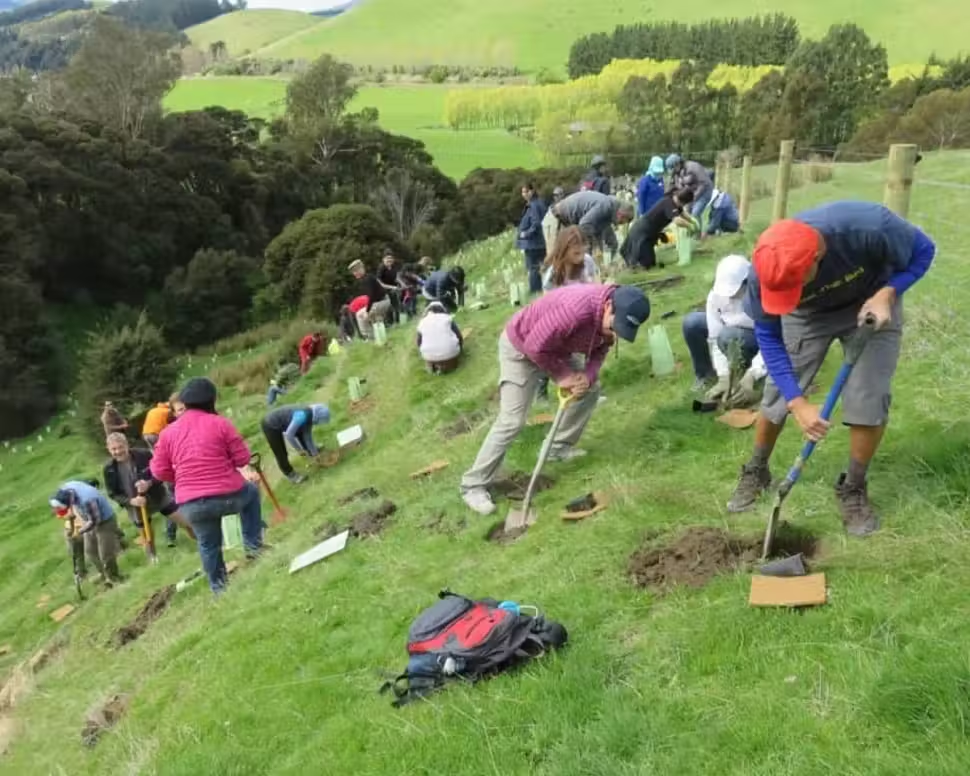
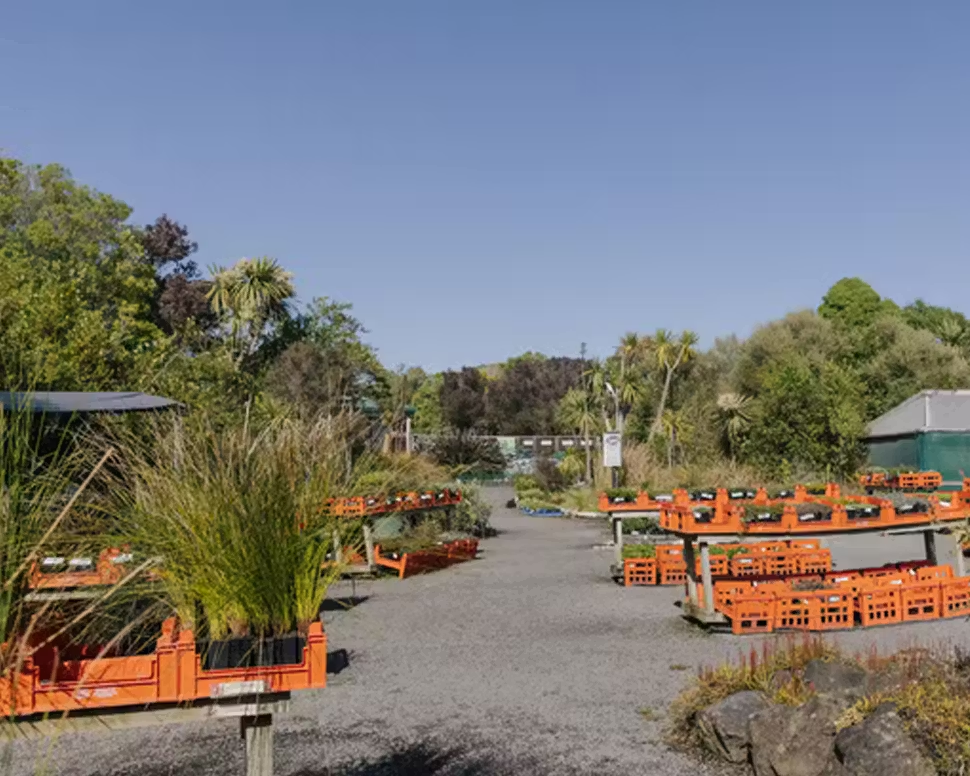
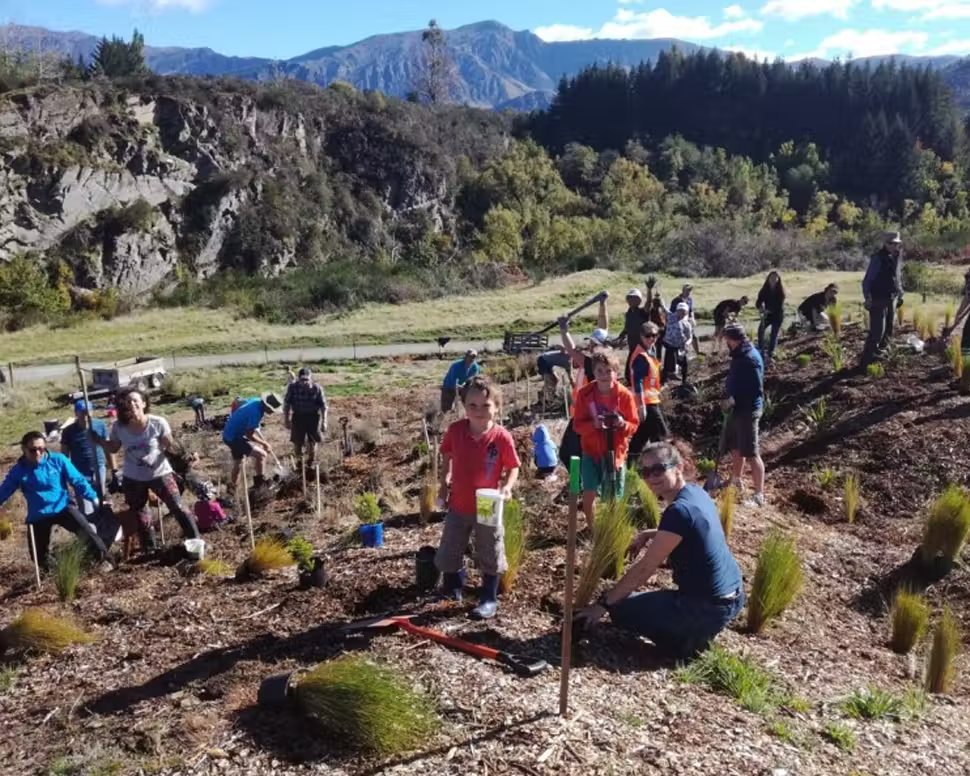
The Whakatipu Basin has lost around 95% of its indigenous biodiversity, and the Whakatipu Reforestation Trust was set up to help bring it back. Operating a volunteer-run community nursery on council land near Queenstown, the Trust propagates and grows up to 12,000 native plants each year, planting them out onto public conservation land across the basin.

In 2024 alone, volunteers recorded more than 7,500 hours. Since it started 12 years ago, more than 140,000 plants have gone in the ground, and habitats are returning for the birds, insects, and lizards that once defined the region.

$6,730 from the Community Decarbonisation Fund is helping the Trust replace its ageing solar system, which currently runs a single plug on sunny days, with a new on-grid solar installation. The upgrade will properly power the nursery for the first time: lighting, a seed storage fridge, office equipment, tool charging, and hot water on tap—not only for cups of tea, but for warm-water propagation, too. The system future-proofs the site as the operation grows, keeping ongoing costs low for an organisation that runs almost entirely on volunteer hours.

Living Springs

Video summary

Living Springs is a not-for-profit outdoor education and environmental centre on Banks Peninsula, near Christchurch. Its vision is to be a camp within an eco sanctuary, where people connect with nature and see restoration in action. Each year it welcomes around 12,000 visitors, including schools, community groups, corporate teams, health camps, and volunteers.

Across its 420-hectare site, running from summit to sea, volunteers carry out planting, trail cutting, and pest control work as part of an ongoing effort to build habitats and restore biodiversity.

Just over $80,900 from the Community Decarbonisation Fund is helping Living Springs replace three petrol and diesel vehicles with a four-wheel drive electric ute and EV charger. For a site this size, it’s a genuine workhorse: reducing emissions and running costs, safer to drive, and able to charge tools on-site, including high-use equipment like chainsaws and weed eaters. It also removes the need to store or handle fossil fuels on the property, and for a centre whose mission is environmental education, gives visitors a visible example of decarbonisation in practice.

Meet the panel

The Community Decarbonisation Fund panel draws from external experts, senior Meridian leaders, and specialists from across the renewable energy and sustainability sector. A new panel is appointed each year, chosen for their commitment to reducing emissions, their support for renewable energy, and the change they're already powering in their own communities.

This year, for the first time, three Certified Renewable Energy customers joined the panel. As well as bringing new perspectives to the process, it gave them a direct say in how the proceeds from their own Certified purchases were allocated, connecting them more closely to the fund their power purchasing helps sustain.

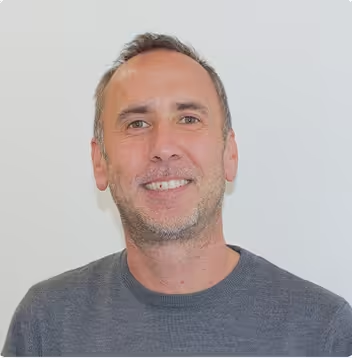
Danny Wilson

Head of Retail Strategy & Commercial, Meridian Energy

Danny Wilson

Danny helps oversee Meridian’s Community Decarbonisation Fund as part of his wider role shaping Meridian’s retail strategy and commercial activity. He brings both governance experience and a practical understanding of the steps that help homes and businesses reduce emissions.

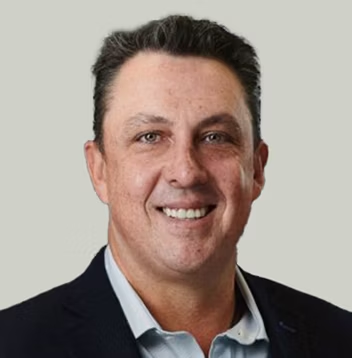
Shaun Goldsbury

CEO, BraveTrace

Shaun Goldsbury

Born and raised in Te Tairāwhiti, with Ngāti Porou and Te Aitanga a Hauiti heritage, Shaun brings both energy market expertise and a strong interest in the resilience of rural communities. His perspective is shaped by the role renewable energy can play in supporting communities facing isolation, disruption and the impacts of extreme weather.

Rotdany Harvey

Property and Procurement Manager, Sustainability Lead, Vehicle Testing New Zealand

Rotdany Harvey

Rotdany brings more than 15 years’ experience leading property, project and sustainability initiatives across large organisations. Her work includes practical decarbonisation projects such as solar installations and EV charging rollout across the VTNZ portfolio, giving her a strong implementation lens on the panel.

Natalie Dunn

Head of Group Strategy and Sustainability, The Co-operative Bank

Natalie Dunn

Natalie’s experience spans strategy, transformation and sustainability, including a key role in strengthening practices such as B Corp and Toitū net carbon zero certification. She is interested in how organisations can balance purpose with long-term sustainability and support practical decarbonisation across Aotearoa.

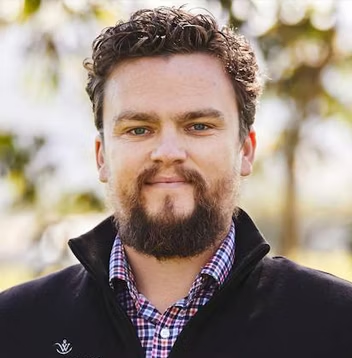
Josh Barclay

Sustainable Development Manager, Whitehaven Wines

Josh Barclay

Josh works on practical systems that support environmental performance, compliance and long-term resilience. With a background spanning government, NGOs and industry, he offers a grounded perspective on decarbonisation and the kinds of projects that can deliver lasting value for communities.

Our change-makers

Whare Āwhina

Type
EV

Whare Āwhina is a kaupapa Māori provider in Tai Tokerau, supporting local people through community law, social support, free meals, food rescue and kai for whānau in need. The funding is helping the organisation switch to an EV, so it can keep delivering these services across the region with lower transport emissions.

Funding received

$28,541.50
Whare Āwhina

Etū Rākau Charitable Trust

Type
EV

Etū Rākau Charitable Trust is a Māori-led organisation focused on kai sovereignty, kaitiakitanga and community innovation, with practical work ranging from māra kai and composting to zero-waste initiatives in Auckland. The funding is helping replace an ageing petrol ute with an EV, giving the trust safer, more reliable transport for kai distribution, mara kai support and waste recovery.

Funding received

$39,990.00
Etū Rākau Charitable Trust

Lifekidz Trust

Type
EV

Lifekidz Trust supports children, young people and young adults with high and very high needs disabilities through after-school, holiday and adult day programmes. The funding is helping the trust switch to an EV, reducing running costs and emissions while supporting safe, consistent care for participants from across Auckland.

Funding received

$48,675.48
Lifekidz Trust

Matuku Reserve Trust

Type
EV

Matuku Link is a leading community wetland conservation organisation in West Auckland, restoring Te Henga Wetland and surrounding native forest while connecting people with nature through conservation, education and volunteer action. The funding is helping staff and volunteers switch to an EV for site visits, reducing emissions and supporting climate resilience work across the wider landscape.

Funding received

$102,600.00
Matuku Reserve Trust

What’s next?

For Meridian

As the country’s largest renewable electricity generator, we are continuing to invest in initiatives that will help decarbonise Aotearoa. Our nationwide public EV charging network is a key focus, as is the growth of our Certified Renewable Energy programme.

We’re also working with iwi, the Department of Conservation and other organisations to find ways our Power Up Community Fund and our Community Decarbonisation Fund can help support local communities, protect native plant and animal life and preserve our environment.

For the fund

We want to keep growing the impact of the fund, and that means both growing our Certified customers and processing more applications. Put simply, the more businesses purchasing our Certified Renewable Energy product, the more impact the Community Decarbonisation Fund can have.

We’ll keep improving how we support applicants, simplify the process, and make sure decisions reflect the real impact projects can have.

For 2026, we estimate that the fund will have more than $2 million available for successful projects. Applications will open later in the year.

Renewable energy pipeline

Solar

Total 2.4GW

2026

Ruakākā
250MW

2027

Te Rahui
200MW

2028

Waikato
100MW

2029

Swannanoa
200MW

2030

Western Bays
250MW

2031

Manawatu
100MW

2032

Canterbury
150MW

2033

Waiinu
200MW

Wind

Total 2.1GW

2027

Te Rere Hau
170MW

2028

Mt Munro
90MW
Manawatu
120MW

2031

Waiinu
350MW

2033

Manawatu
200MW

Battery storage

Total 0.2GW

2027

Manawatu
100MW

Thank you to all of our Certified customers. Let’s share what we’ve achieved and invite others to walk the path with us.